

Need Help?
+91 74570 73773
Plan a smoother group journey with clear vehicle selection, transparent quotation questions and practical tips for local travel, airport transfers, family holidays, corporate trips and outstation routes across India. Official rates starting @ ₹28/KM.
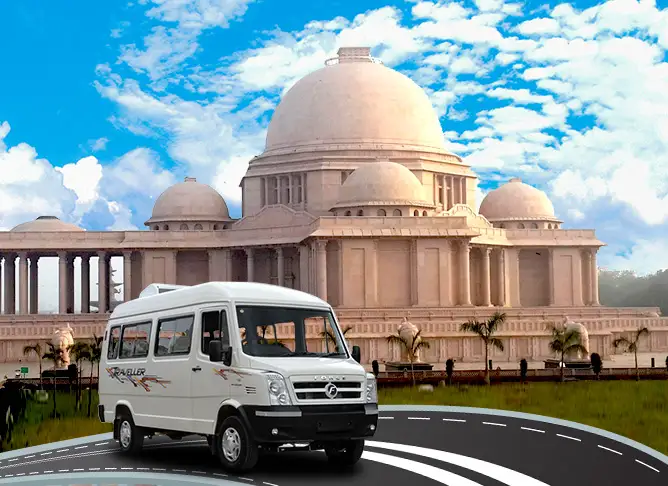
If you need group transport in Noida or Delhi NCR, start by deciding how many people will travel, how much luggage you have, where you need pickup and drop-off, and whether the journey is local or outstation. Ask Shree Ji Travels for vehicle availability and a written quote based on the full itinerary. Confirm the actual seating layout, included kilometres, additional-distance rate, tolls, parking, taxes, driver allowance and cancellation terms before paying an advance.
When several people travel together, coordinating multiple cars can create unnecessary complexity. A suitably sized Tempo Traveller lets the group travel on a shared schedule, keep luggage arrangements organised and simplify pickup planning. It is especially useful when the itinerary includes several stops, different age groups or a return journey on a fixed date. The right choice still depends on passenger count, baggage, route, comfort expectations and the operator’s actual vehicle configuration.
A rental vehicle can be planned for local sightseeing, airport transfers, corporate movement, wedding guest transport, family holidays and multi-day road trips. Before confirming, describe the full itinerary rather than only the destination. Pickup points, intermediate stops, overnight halts, expected daily distance and return timing can all affect the quotation and vehicle availability.
Plan city transfers, shopping visits, sightseeing and event movement around pickup times and parking needs.
Share the full route, return date, overnight stops and planned distance before asking for a package quote.
A vehicle advertised for a particular number of passengers may have different luggage capacity or seating arrangements depending on its model. Ask whether the quoted capacity includes every traveller, whether child seats or special accessibility needs are relevant, and how much luggage can fit safely. Do not assume that the largest listed seating capacity automatically gives the most comfortable experience for a long journey.
Shree Ji Travels is based at H 21/4, H Block, Sector 63, Noida. Travellers can enquire about pickups in Noida and other Delhi NCR locations, subject to availability and the route agreed at booking. Share the exact pickup address, reporting time, destination and expected return details so the operator can assess the request clearly.
People searching for a Tempo Traveller in Sector 62, Sector 63, Greater Noida, Indirapuram, Kaushambi, Ghaziabad, Anand Vihar or Govindpuram should confirm pickup feasibility before making payment. Service coverage can vary by date, vehicle position and trip type. A location name in a search query is not a guarantee that every pickup can be fulfilled at every hour.
For airport, railway station or hotel transfers, provide the flight or train arrival time, terminal or station, passenger count, luggage quantity and a contact number for the person coordinating the group. Allow suitable buffer time for traffic and arrival delays. Ask the provider to confirm waiting-time terms, parking arrangements and whether the quote covers pickup only or both pickup and drop.
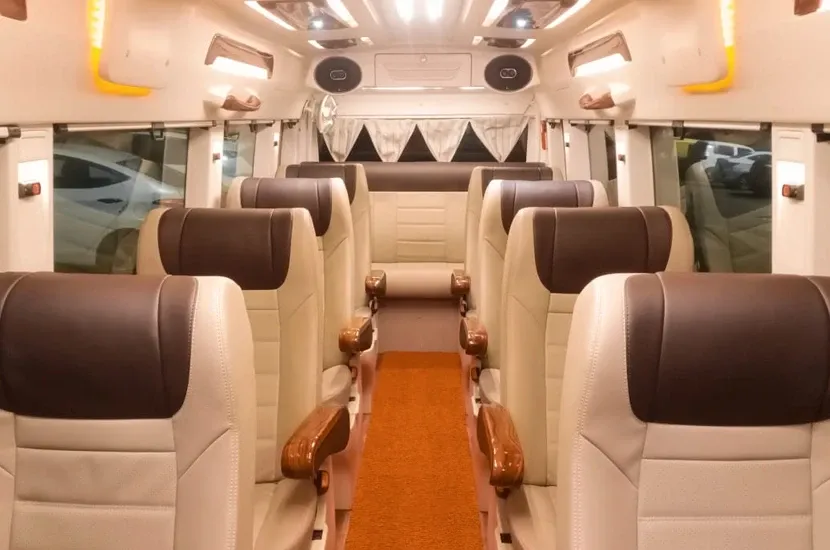
₹30 / KM
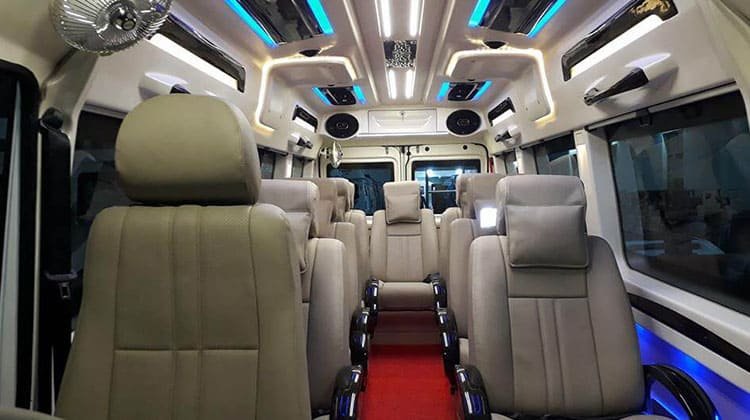
₹30 / KM
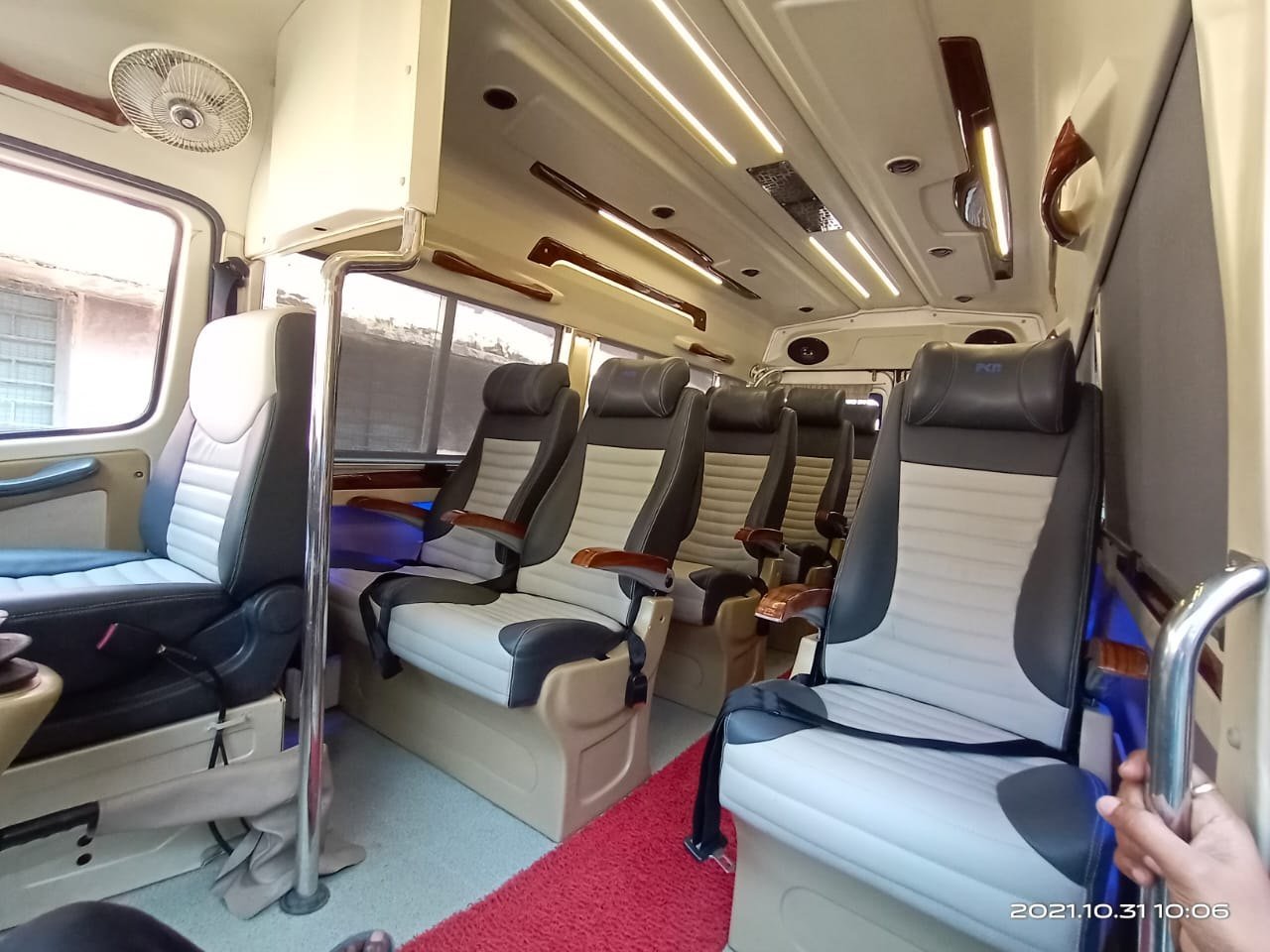
₹32 / KM
₹35 / KM
| Group size | What to compare | Before booking |
|---|---|---|
| Small group | 9- or 12-seat configuration | Passenger count and luggage |
| Mid-sized group | 15-, 16- or 17-seat configuration | Actual usable seats and comfort |
| Large group | 20- or 26-seat configuration | Route access, parking and baggage |
| Premium group trip | Specific Urbania or luxury configuration | Actual vehicle photos and amenities |
Smaller group vehicles may suit a family, a compact office team or a short sightseeing itinerary. When comparing a 9-seater with a 12-seater, count every passenger and consider luggage, journey duration and comfort. Ask for the actual vehicle layout and confirm the number of usable passenger seats rather than relying on a generic model name.
Mid-sized configurations can be useful for extended families, pilgrimage groups and corporate outings. Naming conventions can differ across listings, so confirm the actual registration, seating configuration and available luggage space with the operator. If the group has 15 passengers, do not book solely because a page says “15 seater”; ask whether the exact vehicle offered is legal and suitable for the intended passenger count.
Larger vehicles may work well for event guests, school or college groups, company outings and organised tours. Check the full passenger list, luggage requirements, route access, parking space and boarding arrangements. A larger vehicle may need additional time at narrow pickup points or tourist locations, so include those logistics in the itinerary before finalising the booking.
A vehicle that feels adequate for a short city transfer may be less suitable for a multi-day trip with suitcases. Consider total travel hours, the age and mobility of passengers, planned stops, climate and the amount of baggage. If a passenger has a mobility-related requirement, tell the provider in advance and obtain a clear confirmation of what the vehicle can accommodate.
Tempo Traveller rentals are available in a range of configurations and comfort levels. Force Urbania is a distinct premium van platform often considered by travellers who prioritise a modern cabin experience for group journeys. The best option depends on the exact model, passenger capacity, seating layout, route, budget and availability on the requested date.
Ask for recent photographs of the specific vehicle, not only stock images. Confirm air-conditioning, seat configuration, luggage capacity, charging points or other amenities only if they matter to your group. Features can vary between vehicles and model years, so a broad label such as “luxury” should not replace a written list of confirmed inclusions.
For a short trip with a modest budget, a conventional Tempo Traveller may be appropriate. For a premium experience or a longer road journey, a Force Urbania may be worth comparing. Neither choice is automatically best for every group. Ask for comparable quotes for the same route, dates, passenger count, kilometre allowance and inclusions before deciding.
| Vehicle Seating Category | Per KM Rate | Driver Allowance | Min. Daily Limit | Ideal Group Size |
|---|---|---|---|---|
| 7 Seater VIP Maharaja | ₹28 / KM | ₹500 / Day | 250 KM | 4 – 6 Passengers |
| 9 Seater Luxury Traveller | ₹30 / KM | ₹500 / Day | 250 KM | 6 – 8 Passengers |
| 12 Seater Deluxe Traveller | ₹30 / KM | ₹500 / Day | 250 KM | 8 – 11 Passengers |
| 15/16 Seater Executive Van | ₹32 / KM | ₹500 / Day | 250 KM | 12 – 15 Passengers |
| 18/20 Seater Super Luxury | ₹33 / KM | ₹600 / Day | 250 KM | 15 – 19 Passengers |
| 26 Seater / Force Urbania | ₹35 / KM | ₹600 / Day | 250 KM | 20 – 25 Passengers |
Rental charges depend on the vehicle category, trip duration, route, travel dates, included distance, overnight halts and the operator’s pricing terms. Some quotations are package-based while others include a kilometre allowance with additional charges beyond the limit. A “per kilometre” figure alone may not show the total cost of the journey, so compare the complete written quotation.
Share pickup and drop locations, travel dates, pickup time, passenger count, vehicle preference, number of days, planned stops and approximate luggage. State whether the trip is one-way or round-trip. Ask the provider to identify the included kilometres, extra-kilometre rate, tolls, state taxes, parking, driver allowance, overnight charges and any advance payment or cancellation terms.
A listed extra-kilometre charge is not necessarily the full rental rate. It may apply only after an agreed daily or package distance is exceeded. Confirm this distinction in writing before comparing prices. Shree Ji Travels should provide a current quotation for the exact itinerary rather than having customers infer a final trip total from one rate alone.
A simple estimate may start with the agreed package or daily charge, then add any applicable extra-distance amount and any exclusions stated in the quote. If the contract specifies a daily kilometre allowance, compare expected route distance against that allowance for each day. Treat online examples as illustrations only; actual route distance, detours, traffic restrictions and agreed terms can change the final bill.
Ask whether fuel, tolls, state taxes, parking, driver allowance, night halt, permit charges and local entry fees are included or payable separately. Request the final amount or a transparent calculation before confirming. If a component is uncertain, ask how it will be charged and what evidence or receipt will be provided. A clear written quote is more useful than a headline rate without conditions.
There is no universal package that includes every expense. Depending on the quotation, the agreed vehicle and driver may be included while parking or other location-specific expenses may be extra. Ask for a line-by-line breakdown. The provider should explicitly state which tolls, taxes, fuel, driver allowance, waiting time and overnight expenses are included for your particular itinerary.
Confirm that the vehicle is supplied with a driver if that is what you need. Ask about reporting time, driver contact details, planned breaks, overnight halt arrangements and what happens if a delay changes the itinerary. Do not assume the driver can legally or practically complete unlimited driving hours; safe scheduling and appropriate rest matter on long-distance journeys.
Before paying an advance, check the business identity, amount due, balance, payment recipient and cancellation terms. Ask for written booking confirmation and a receipt. Corporate customers should confirm invoice details and any applicable tax treatment in advance. Never share OTPs, card PINs or banking passwords to confirm a vehicle reservation.
| Outstation Corridor | Expressway / Highway | Approx. Distance | Key Attractions | Route Details |
|---|---|---|---|---|
| Delhi/Noida to Haridwar & Rishikesh | NH334 & Delhi–Meerut Expressway | 225 – 245 KM | Har Ki Pauri, Ganga Aarti, Ram Jhula, Rafting | View Details ↗ |
| Delhi/Noida to Mathura & Vrindavan | Yamuna Expressway | 160 – 180 KM | Bankey Bihari, Prem Mandir, ISKCON, Krishna Janmabhoomi | View Details ↗ |
| Delhi/Noida to Agra Taj Mahal Tour | Yamuna Expressway | 210 – 230 KM | Taj Mahal, Agra Fort, Fatehpur Sikri, Mehtab Bagh | View Details ↗ |
| Delhi/Noida to Jaipur Pink City | Delhi–Mumbai Expressway | 280 – 310 KM | Amer Fort, Hawa Mahal, City Palace, Chokhi Dhani | View Details ↗ |
| Delhi/Noida to Nainital & Corbett | NH9 & Moradabad Bypass | 290 – 315 KM | Naini Lake, Mall Road, Jim Corbett Jungle Safari | View Details ↗ |
| Delhi/Noida to Ayodhya Ram Mandir | Purvanchal & Lucknow Expressway | 650 – 680 KM | Shri Ram Janmabhoomi Temple, Saryu Ghat, Hanuman Garhi | View Details ↗ |
For a group trip to Haridwar or Rishikesh, agree the departure time, temple or sightseeing stops, return date and expected driving hours. Weekend traffic and seasonal demand can affect the itinerary. Ask for the estimated route distance and the basis of the quotation. If the group intends to visit several places, list every stop before booking rather than adding them informally during the trip.
For Agra, Jaipur and other outstation destinations, compare the planned journey with your available time. Include the time needed for sightseeing, meals, parking and pickup coordination. A quote for a direct transfer may differ from a multi-stop sightseeing package. Confirm whether the driver waits at the destination, whether the vehicle remains with the group and how return travel is billed.
Hill journeys require practical planning for road conditions, weather, daylight and local access restrictions. Check current conditions before departure and avoid relying on a fixed travel-time estimate. Some roads or parking areas may not be suitable for every vehicle size. Confirm the drop point and any local transport needs with the operator before travelling.
For a tour covering several destinations, prepare a day-by-day plan with overnight locations, expected distance, sightseeing time and the final drop-off. This makes it easier to identify where the vehicle is needed and to calculate a realistic quotation. Changes to route or duration should be agreed with the operator and reflected in the final payment terms.
Group airport transfers work best when the booking includes terminal information, flight timing, passenger count, luggage volume and a clear meeting point. Confirm whether parking and waiting time are included. For international arrivals or flights prone to delay, discuss how arrival updates will be handled and what waiting charges, if any, apply.
Wedding transport involves multiple pickup points, event schedules and return trips. Share the venue, reporting time, number of guests, expected departures and whether vehicles must remain on standby. For larger functions, consider a written movement plan and a coordinator who can communicate with the driver. Confirm the vehicle count and backup arrangements in advance.
For employee transport, offsites or conferences, provide the pickup roster, reporting windows, destination, billing requirements and any company safety procedures. Monthly or recurring arrangements should have written service levels, vehicle requirements, payment cycles and escalation contacts. Verify whether the provider can meet the schedule consistently before committing to a long-term arrangement.
Organisers should verify the vehicle’s legal suitability, passenger capacity, insurance and required permits for the specific journey. Maintain an accurate passenger list, emergency contact details and a clear pickup plan. Any special requirements should be discussed before booking. Applicable rules can vary by vehicle type and jurisdiction, so confirm compliance with the relevant authority or qualified professional.
Check the provider’s contact information, address, written quotation and booking confirmation. Ask for the actual vehicle details and relevant commercial documents where appropriate. Confirm that the vehicle offered matches the capacity and amenities promised.
Confirm the total amount, advance payment, balance due, cancellation rules, included distance, extra-distance calculation and any expenses payable separately. Keep a copy of the quotation and payment receipt. If an offer is unclear or the recipient details do not match the business you contacted, pause and verify independently before transferring money.
Ask whether air-conditioning and requested amenities are available on the specific vehicle. Check recent vehicle photographs, seat condition and luggage arrangements where possible. On the day, follow the driver’s safety instructions and use seat belts where fitted. Avoid overloading the vehicle or asking the driver to make unsafe stops or drive beyond safe limits.
A credible travel page should make it easy to understand who provides the service, where the business is based, how to request a quote and what remains subject to confirmation. Publish only rates and features that the business can honour. Use original photographs and explain how pricing is calculated. Do not fabricate customer reviews, certifications, awards, fleet size or guarantees.
Tell the team where the trip starts and ends, when you want to travel, how many passengers will travel and whether the booking is one-way, round-trip or multi-day. Include stops and expected return time. Clear details help the team determine which vehicle and quote are appropriate.
Discuss the group size, luggage, trip length and preferred comfort level. Ask which seating capacity is available for your date and request details of the actual vehicle. If you are comparing a Tempo Traveller with a Force Urbania, request quotes on the same trip assumptions.
Check the total price, included distance, extra-kilometre rate, tolls, parking, taxes, driver allowance, overnight charges, advance and balance. Ask for any unclear item to be clarified in writing. Do not rely only on an advertised starting rate to estimate the final amount.
Once the details are agreed, follow the business’s verified booking and payment process. Keep the confirmation, contact details, vehicle details and payment receipt accessible during the trip. Reconfirm the pickup time and meeting point before departure, especially for airport transfers and early-morning journeys.
Use this checklist when comparing two or more operators. A lower advertised price can exclude expenses that another quote includes. Ask each provider to calculate the same route and duration, then compare the complete amount.
| Item | Question to ask | Record the answer |
|---|---|---|
| Vehicle | Which exact model and seating configuration will be supplied? | Model / seats / vehicle confirmation |
| Distance | What kilometres are included per day or package? | Included distance |
| Extra distance | What rate applies after the included limit? | Additional-km rate and calculation |
| Trip duration | How are extra hours, overnight stays or delays handled? | Time and halt terms |
| Expenses | Are tolls, taxes, parking and driver allowance included? | Included / excluded list |
| Payment | What advance is due and when is the balance payable? | Amounts, due dates and receipt |
| Changes | How are route changes and cancellations handled? | Written policy |
Use the written quote as the final reference. Prices and availability can change with dates, vehicle type, route and operator terms.
Before contacting a rental company, assemble the information that determines the trip: travel date, pickup time, exact pickup address, destination, return date, number of passengers, luggage quantity and all planned stops. If the trip involves several families or departments, nominate one coordinator to consolidate changes. This reduces conflicting instructions and makes it easier for the provider to recommend an appropriate vehicle. Include any accessibility requirements, child passengers or unusual baggage so they can be considered before a vehicle is assigned. A clear brief also makes quotes from different operators easier to compare.
A fair comparison uses identical assumptions. Send the same route, dates, vehicle capacity, trip duration and stop list to each provider. Ask each to state the included distance and the treatment of tolls, parking, taxes, driver allowance, overnight halt and extra kilometres. Confirm whether the quote is a package price or an estimate subject to route changes. Keep the replies in writing and compare the total expected payment rather than ranking operators by one number. If an item is not specified, ask for clarification instead of assuming it is included.
Write the trip plan in chronological order: reporting time, pickup locations, planned breaks, destination arrival, sightseeing stops, overnight location and return time. Include contact details for the trip coordinator and any time-sensitive appointments. For multi-day trips, specify where the vehicle is expected to remain available and when the driver may be off duty. Build in reasonable buffers for congestion, meals and weather. A well-planned itinerary is easier to price and helps everyone understand what has been agreed.
When hiring a commercial Tempo Traveller for journeys from Noida or Delhi NCR across state boundaries (such as entering Haryana for Gurgaon/Faridabad, Rajasthan for Jaipur, or Uttarakhand for Haridwar/Rishikesh), understanding statutory tolls and inter-state border taxes is vital. Commercial tourist passenger vehicles operate with electronic commercial FASTags linked to national toll plazas across key expressways (including the Yamuna Expressway Jewar Toll, Eastern Peripheral Expressway, and Delhi–Meerut Expressway Kashi Toll).
State border commercial passenger permits (All India Tourist Permit – AITP) require payment of state transport department entry taxes at state border checkpoints. When booking with Shree Ji Travels, customers can choose either a transparent basic per-km rate (where actual FASTag tolls, state border taxes, and municipal parking slips are settled transparently as incurred against computerised receipts) or an all-inclusive fixed outstation contract. Choosing an all-inclusive package ensures zero transit stoppages at commercial border checkposts, allowing your family or corporate group to travel smoothly without cash payments at toll barriers.
North Indian summers (especially April through July across Delhi NCR, Rajasthan, and Uttar Pradesh) frequently register ambient temperatures exceeding 42°C to 45°C. In such demanding weather, a standard car AC is insufficient for a large 12 to 26-seater cabin volume. All Shree Ji Travels Tempo Travellers and Force Urbania vans are engineered with heavy-duty dual-compressor roof-mounted air conditioning systems.
These units deliver high-CFM airflow with individual, adjustable eyeball AC louvers positioned directly above every single passenger seat. Even passengers in the rearmost rows experience crisp, rapid cabin chilling within minutes of starting the engine. Furthermore, our fleet vehicles undergo rigorous pre-trip radiator coolant flushings, condenser coil washing, and high-pressure belt checks before every outstation trip. This guarantees continuous cabin comfort without vehicle engine overheating during intense highway cruising or hill climbs.
Many travellers plan trips on mobile devices, so the booking page should make key details easy to scan. Put the service area, vehicle options, quotation process and contact action where users can find them without excessive scrolling. A WhatsApp enquiry should open a conversation without automatically claiming that a booking is confirmed. Ask the customer to share the date, route, passengers and vehicle preference, then provide a written quote and confirmation through the agreed business process.
When travelling with older adults, young children or someone who needs extra assistance, mention the requirement before the vehicle is assigned. Ask about step height, seat access, available space and planned breaks. Do not assume a standard passenger van is wheelchair-accessible or has child restraints. Verify each feature directly with the provider and make sure the itinerary allows adequate time for boarding and rest stops.
Road conditions, seasonal demand, congestion and local restrictions can affect the planned journey. Check current advisories for the destination and leave flexibility in the schedule. Tell the operator about detours or additional stops as early as possible because they may change distance, duration and cost. For hill travel or pilgrimage routes, confirm the drop point and vehicle suitability instead of assuming that every road or parking area is accessible to every vehicle size.
Use the verified payment method provided by the business and confirm the recipient before sending money. Keep the quotation, payment receipt, booking reference, contact number and cancellation terms. Avoid payments to an unexpected personal account without verification. Never disclose a banking PIN, password or one-time passcode to someone claiming to confirm a booking. For corporate bookings, agree on invoice details and the payment schedule before the trip.
After travel, record whether the vehicle matched the booking, whether the agreed pickup time was followed and whether the final amount matched the quotation. If you leave feedback publicly, describe your genuine experience and avoid claims you cannot verify. Businesses can use authentic feedback to improve communication and trip planning, but should not fabricate testimonials or offer incentives that violate a platform’s review rules.
A useful travel budget includes more than the vehicle line item. Consider the planned distance, trip duration, parking, tolls, meals, sightseeing tickets and accommodation that your group may need to arrange separately. Ask the rental operator which costs are part of the vehicle contract and which costs remain the traveller’s responsibility. For a group, decide how shared expenses will be divided before departure so that the driver or booking coordinator is not asked to resolve disagreements on the road. If the itinerary is still flexible, ask the operator to quote the planned route and explain how a meaningful change would affect the price. Keep a small contingency for personal expenses, but do not treat an unconfirmed estimate as a guaranteed final bill.
A convenient pickup point can save time at the beginning and end of a trip. Select a location where the group can assemble safely and where the vehicle can legally stop. In busy market areas, residential lanes, metro exits and airport zones, stopping rules and vehicle access can vary. Share a precise landmark and a phone contact for the coordinator. If several passengers need pickup, discuss whether the extra stops fit the route and schedule. A short map pin or written location description can prevent confusion, but confirm the final meeting point directly with the driver or booking team. Avoid asking a large vehicle to enter a narrow lane without confirming that access is suitable.
Luggage can change which vehicle is most practical. A group carrying small day bags may need less storage than the same number of passengers travelling for a week with suitcases. Tell the provider how many large bags, cabin bags, strollers or special items will travel. Do not assume every seat configuration has the same luggage capacity. Keep aisles and emergency exits clear, and avoid placing bags where they could become unsafe during braking. For airport trips, share luggage details when requesting the quote. If the group plans to shop or collect equipment during the journey, discuss the extra storage requirement in advance rather than discovering the limitation at pickup.
Demand can rise during long weekends, school holidays, wedding seasons, major events and pilgrimage periods. If your dates are fixed, enquire early and ask how long a quotation remains valid. An enquiry is not the same as a confirmed reservation; obtain written confirmation after the agreed booking steps are complete. If the trip is flexible, ask whether alternate departure times or dates could offer more vehicle choice. Do not rely on a vehicle photograph or a general availability statement from an old post as proof that a specific vehicle is reserved for your date. Reconfirm the vehicle, reporting time and pickup point shortly before travel.
When several families share a vehicle, agree on the passenger list, luggage expectations, child travel needs and pickup schedule before requesting the final quote. Choose one coordinator to approve itinerary changes and communicate with the operator. Decide in advance how costs will be split and who will manage the booking receipt. If passengers join at different points, check whether each stop is feasible and whether the added distance or time changes the quote. A shared itinerary helps the group avoid last-minute disputes and makes it easier to choose the right capacity. For long journeys, include planned meal and rest breaks instead of trying to maximise distance at the expense of comfort.
Companies arranging staff movement or a team outing may need a purchase order, tax invoice, vendor details, payment schedule or written service confirmation. Identify those requirements at enquiry stage. Share the billing name and address, trip coordinator, passenger count, route, reporting time and any security or site-entry instructions. Ask the provider to confirm which documents can be supplied and ensure that the information matches the actual service. Do not assume a personal travel quotation automatically meets an organisation’s procurement rules. For recurring bookings, document the vehicle category, replacement process, cancellation notice, escalation contact and invoice cycle so that both sides have a clear operational reference.
A complete enquiry can be short but should contain the information needed for a meaningful response. For example: “Hello, I need a vehicle for 12 passengers from Sector 63, Noida to Haridwar on 18 November, returning the same day. Please share available vehicle options, total quotation, included kilometres, extra-distance rate, toll and parking treatment, driver allowance and advance-payment terms.” Replace the example date and route with your actual requirements. If the itinerary includes several days or stops, add them in order. This is more useful than sending only “rate batao,” because a provider cannot calculate an accurate price without understanding the journey.
One of the most frequent surprises for group travellers is underestimating luggage volume. Even if a vehicle has enough passenger seats, large suitcases, baby strollers, sports gear, and elder mobility equipment can quickly cram the interior aisle if luggage space is inadequate.
In our 9 and 12-seater Maharaja and Deluxe Tempo Travellers, a dedicated rear luggage trunk accommodates 6 to 8 medium-to-large trolley bags, complemented by deep overhead aircraft-style parcel racks above every row for backpacks, laptops, and hand baggage. For larger groups traveling on 16, 20, or 26-seater coaches for 4 to 10-day outstation pilgrimages or weddings, vehicles are equipped with both an extended rear boot and a reinforced commercial rooftop carrier covered with heavy-gauge waterproof tarpaulin. We advise group coordinators to assess luggage count upfront when requesting a quote so that our dispatch desk can assign the ideal vehicle chassis length.
Travel plans sometimes change because of weather, traffic, event timing or a passenger’s needs. Contact the operator as early as possible and explain the new stop, timing or destination. Ask whether the change affects distance, duration, availability or charges, and confirm the revised agreement in writing. Do not assume that a quote for a direct trip covers a long sightseeing detour or an extra overnight halt. If a delay occurs on the day, communicate through the agreed contact method and prioritise safe driving. Avoid pressuring a driver to speed or skip necessary rest in order to recover time.
A comfortable group trip begins with realistic expectations. If any passenger has mobility, sensory or medical-related travel needs, discuss the practical requirements before booking without sharing unnecessary private details. Ask about entry height, handholds, seating position, rest-stop frequency and whether the vehicle can accommodate mobility equipment. Confirm the answer for the actual vehicle rather than relying on a general fleet description. Build sufficient boarding time into the itinerary and make sure the group knows the meeting point. If the provider cannot meet a critical need, it is safer to identify that before paying than to discover it at pickup.
Group road travel can be made more efficient by coordinating pickup points, packing thoughtfully, planning breaks and avoiding unnecessary detours. Follow local parking and access rules, respect residents near pickup locations and keep public spaces clear when boarding. Carry waste bags and dispose of rubbish appropriately. In environmentally sensitive or crowded destinations, follow current local guidance and avoid blocking access for other travellers. These practical habits help the group and reduce pressure on drivers, residents and destination infrastructure. Responsible planning is not a substitute for vehicle safety or legal compliance, but it can make the overall journey more organised.
One day before departure, reconfirm the vehicle category, reporting time, pickup point, driver contact process and destination. Keep the written quote, booking receipt, payment record and emergency contact accessible. Ensure the group coordinator has the passenger list and understands the agreed stops. Recheck weather or route advisories if the trip is long or includes hill roads. Charge phones and share the meeting point with travellers. If any detail has changed, inform the operator and agree on the impact before the vehicle begins the trip. These small checks reduce confusion and help the group start on time.
A driver is an important part of a safe, organised journey. Confirm the reporting time, contact process, planned route and whether the trip requires an overnight halt. Discuss reasonable rest breaks for long journeys and avoid scheduling an itinerary that depends on unsafe driving hours. Ask who should be contacted if the pickup is delayed or the route changes. The purpose of this discussion is to establish realistic expectations, not to pressure a driver to rush. For multi-day trips, clarify when the vehicle and driver are expected to be available each day and whether the group’s plans allow sufficient rest. Put any special schedule requirements into the written itinerary so the booking team can confirm feasibility before travel.
Safety on North Indian expressways—such as the Yamuna Expressway, Agra–Lucknow Expressway, and Delhi–Mumbai Expressway—demands disciplined driving and strict adherence to commercial transit rest schedules. Shree Ji Travels strictly enforces mandatory driver fatigue policies for all long-distance journeys.
Our chauffeurs are instructed to schedule brief 15-minute refreshments and vehicle walkaround breaks every 3 to 3.5 hours of continuous driving. For multi-day outstation journeys, clients must ensure adequate driver rest arrangements: our drivers are assigned dedicated night rest quarters at hotels, dharamsalas, or homestays. Well-rested, alert chauffeurs with over 10 years of commercial highway experience ensure that your family, wedding party, or corporate delegation travels in absolute peace of mind through day and night transit corridors.
Operating commercial vans on steep mountainous terrain—such as the Rishikesh to Devprayag ghats, Dehradun to Mussoorie climb, or Delhi to Nainital and Shimla corridors—requires specialized hill driving expertise that ordinary city cab drivers simply do not possess.
Every Shree Ji Travels driver deployed on hill routes holds a valid hill-driving commercial certification and has years of hands-on experience navigating hairpin bends, single-lane mountain passes, and blind corners. Our hill transit protocol mandates engine braking using low gears on steep descents to prevent brake-pad overheating, zero risky overtaking on blind curves, and mandatory pre-departure brake shoe, tire tread depth, and suspension leaf inspections. In severe monsoon or winter fog conditions, our 24×7 fleet monitoring room maintains continuous satellite contact with the driver to re-route via safer corridors if landslides or roadblocks occur.
A common grievance when renting tourist vehicles from unverified aggregators or local taxi brokers is unexpected post-trip billing surprises: sudden demands for driver food allowances, inflated extra-kilometer rates, or unmentioned night transit surcharges. Shree Ji Travels operates on a strict policy of 100% upfront billing transparency.
Before you pay any booking token, our dispatch team provides a formal written quotation detailing the exact base per-km rate (e.g., ₹28/KM for 7-seater Maharaja, ₹30/KM for 9/12-seater, ₹32/KM for 16-seater, ₹35/KM for 26-seater and Urbania), the standard 250 KM daily billing threshold, driver daily allowance (₹500/day for up to 16 seats, ₹600/day for 20–26 seats), and night halt rules. All toll and state border permit expenses are either accounted for upfront in an all-inclusive rate or settled strictly against genuine computerized FASTag receipts. Zero guesswork, zero unannounced surcharges.
A cancellation or rescheduling policy helps both the traveller and the operator understand what happens when plans change. Before confirming a booking, ask how much notice is required, whether an advance is refundable, how date changes are handled and what happens if the operator cannot provide the agreed vehicle. Read the terms carefully and keep the written confirmation. Do not assume that another operator’s policy applies to your booking. If a policy is unclear, ask for clarification before payment rather than relying on an informal verbal assurance.
Shree Ji Travels is based in Sector 63, Noida. Customers can enquire about pickup arrangements in Noida and Delhi NCR, including the areas below. Each request remains subject to vehicle availability, route feasibility and confirmation by the booking team.
Share the exact gate, office, society or meeting point and reporting time.
Confirm the pickup point and whether the vehicle must return to Noida or continue elsewhere.
Provide the full address and any multiple pickup stops so route time can be planned.
For station or metro-area pickup, agree on a safe, legal meeting point in advance.
Share the terminal or landmark, arrival time, luggage count and waiting-time requirements.
Confirm the date, vehicle capacity and exact pickup location with the operator.
These are enquiry areas, not a promise that every vehicle is stationed in each locality. Confirm coverage before you finalise your travel arrangements.
Short answers to common questions about Tempo Traveller rental, prices, vehicle selection and group journeys from Noida.
The best provider is one that can supply a suitable vehicle for your dates, gives a clear written quote, confirms the pickup and route, explains inclusions and exclusions, and communicates reliably. Compare the actual vehicle, passenger capacity, luggage space and total trip cost rather than choosing on a headline rate alone. You can contact Shree Ji Travels in Sector 63, Noida, to request a quote.
There is no single price for every vehicle and itinerary. Charges depend on seating capacity, trip duration, included daily distance, route and what the package includes. Ask for a current written quotation and confirm whether any per-kilometre figure is the base rate or only the extra-kilometre rate.
The final price depends on dates, pickup location, route, total days, expected distance and inclusions. Share these details with the rental provider and ask for the total amount, daily distance allowance, extra-kilometre terms and any expenses excluded from the package.
Choose based on the number of passengers, luggage, journey duration, comfort preferences and budget. A smaller vehicle may suit a compact group, while a larger or premium configuration may be better for more passengers or a longer itinerary. Confirm the actual seating layout and luggage capacity before booking.
They are different vehicle options and can vary in cabin design, seating layout, features and price. Compare the specific vehicle offered, rather than relying only on the model name. Ask for current photos, seating capacity, confirmed amenities and a quotation for the same itinerary.
Provide pickup and drop locations, travel dates, passenger count, preferred vehicle, intermediate stops and expected return. Ask for a written quote with included distance, extra-kilometre charges and expenses such as tolls, parking or overnight costs clearly identified. Confirm the booking and keep the receipt.
Ask the provider to confirm a legally suitable vehicle with at least the required usable passenger seats and enough space for luggage. Seating labels can differ across listings, so verify the actual configuration and do not assume that a vehicle name guarantees the number of seats you need.
Inclusions vary. A quotation may cover the vehicle and driver while parking, tolls, taxes, driver allowance or overnight costs may be treated differently. Ask for every inclusion and exclusion in writing, including the distance allowance and the rate for additional kilometres.
A one-day price depends on vehicle type, pickup point, route, kilometres, hours, date and package terms. Provide the full itinerary and ask whether there is a daily kilometre limit, a time limit or extra charges for additional distance, parking, tolls and waiting.
You can enquire with Shree Ji Travels about a Noida-to-Haridwar group trip, subject to vehicle availability and confirmation of the itinerary. Share the date, passenger count, pickup point, return plan and any stops to receive an accurate quote.
The best vehicle depends on group size, baggage, road conditions, access to your stops and budget. Compare the actual seating and luggage configuration, and confirm the drop-off point and any local transport requirements before finalising the rental.
Confirm the exact vehicle, recent photos, seating capacity, air-conditioning and any amenities that matter to you. Review the full quote, cancellation policy, included distance, driver arrangement and extra expenses. Do not assume that every vehicle advertised as luxury has identical features.
Many rental arrangements are supplied with a driver, but confirm this in your specific quotation. Ask whether driver allowance, overnight halt, meals or other driver-related expenses are included or charged separately, and confirm the reporting time and contact process.
Extra-kilometre charges generally apply when the agreed included distance is exceeded, but the precise calculation depends on the contract. Confirm the included daily or package kilometres, the applicable additional rate and how the final distance will be measured before booking.
Count every passenger, account for luggage and consider journey length. Compare the actual layout, comfort, cost and availability for your date. A larger vehicle may offer more room but can cost more; request comparable quotes for the same itinerary.
You can enquire with rental operators serving Delhi NCR, including Shree Ji Travels in Sector 63, Noida. Availability depends on your date and route. Ask for the exact Urbania configuration, current photos, total trip quote and confirmed inclusions.
Consider passenger count, luggage, route, travel duration, comfort and the road conditions expected on your itinerary. Confirm that the vehicle and operator are suitable for the planned route and dates, and check current weather, road and local travel advisories before departure.
Yes, you can enquire about group airport transfers. Share the terminal, flight time, pickup location, passenger count and luggage volume. Confirm waiting time, parking, flight-delay handling and whether the quotation covers one transfer or both pickup and drop.
Package inclusions differ by operator and route. Request written confirmation of vehicle and driver, included kilometres, tolls, state taxes, parking, driver allowance, overnight expenses and any local fees. Ask how extra distance or itinerary changes will be charged.
Compare quotations for the same dates, route, passenger count, vehicle class and duration. Check the total payable amount, included kilometres, extra-distance rate, tolls, taxes, parking, driver allowance, overnight charges and cancellation terms. A lower headline rate may not mean a lower final bill.
Explore verified rental fleets, seating capacities, local NCR pickup locations, and outstation corridors:
Speak directly with our transport dispatchers to reserve verified luxury coaches, Force Urbania vans, and experienced drivers at standard transparent rates.